
9 places and unique experiences to discover the Lecrín Valley
15 min read
Written by official guides
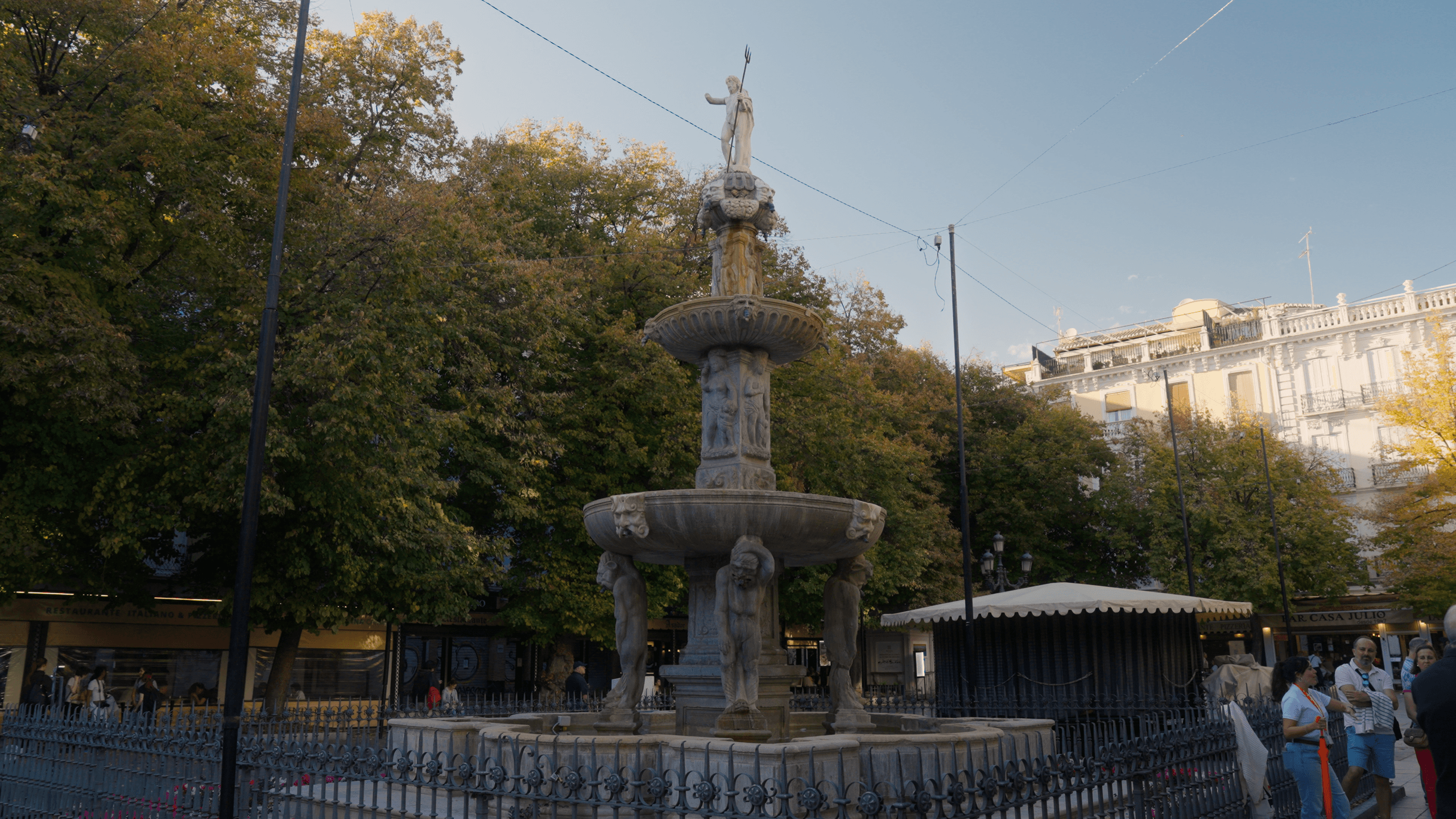
The Lecrín Valley is half an hour from Granada city, on the way to the coast. It is an area of white villages among orange trees where the irrigation channel system built by the Arabs centuries ago still works. It smells of orange blossom in spring and has that authentic rural feel that is hard to find.
The district has 12 municipalities spread from Sierra Nevada almost to the Costa Tropical. Dúrcal is the big village where there is everything: supermarkets, a pharmacy, buses to Granada. Nigüelas has a water mill that still grinds grain and Padul the lagoon visited by migratory birds. Mondújar preserves the remains of the castle where Queen Zoraya lived.
The Moriscos lived here until Philip II expelled them in 1570 after the war. They left behind the citrus crops, the irrigation systems and the architecture of white houses with courtyards. Today you can go hiking among waterfalls, climb to viewpoints overlooking all of Granada or simply lose yourself in villages where life moves slowly.
1. Padul Lagoon
The Padul Lagoon is the second largest wetland in Andalusia after Doñana. It has 158 different bird species that you can watch from wooden hides installed around the perimeter. It is a stopover for migratory birds and a breeding ground for local species.
The wetland is in Padul, 15 minutes from Dúrcal by local road. There are two main trails fitted with boardwalks. The Senda del Álamo is a 2 km circular route around the lagoon. The Sendero del Mamut is 1.5 km long and reaches the main hides, where the birds are best seen.
The lagoon has been a nature reserve since 1999. In winter flamingos, ducks and coots arrive. In spring grey herons and night herons nest. The best times for birdwatching are dawn and dusk, when the birds are most active. You can park for free at the visitor centre, which has information on species and peak activity times.
Bring binoculars if you have them, comfortable shoes for walking on dirt paths and water to drink. Entry is free every day of the year. Camping and fires are not allowed, but photography and picnics at the tables provided are.
2. Plaza de Nigüelas
The Plaza de Nigüelas keeps the original structure of an Andalusian village, with a church, town hall and white houses around it. The 16th-century Church of San Juan Bautista dominates the ensemble with its bell tower, visible from all over the district. The church has a Baroque altarpiece and 18th-century carvings that are worth seeing inside.
Nigüelas has 1,100 inhabitants and is 15 minutes from Sierra Nevada by mountain road. The village sits on a visible geological fault that crosses the whole main square. This fracture is one of the most important in the peninsula and can be seen in the unevenness of the ground and the buildings adapted to it.
On the square is the restored Nigüelas Mill, which uses water from the irrigation channels to grind grain just as it did 500 years ago. It is open on Saturdays and Sundays with guided visits explaining the whole traditional process. It costs €3 and lasts 30 minutes. Children can watch the millstones working and understand how flour was made before industry.
The Villa de Nigüelas Classical Music Festival is held every July in the square with free concerts. Professional musicians come from Spain and Europe. The stage is set up in front of the church and the acoustics are perfect because it is surrounded by buildings. Performances are at 22:00 for a whole week.
Parking is easy in nearby streets. There is a bar with a terrace on the square for a drink after the visit.
3. Ermita del Zapato, a natural balcony
The Ermita del Santo Cristo del Zapato stands at the top of the Chinchirina ravine, 879 metres above Pinos del Valle. From here you can see the whole Lecrín Valley, Granada city and Sierra Nevada on clear days. It is the best natural viewpoint in the area, with 360-degree views.
The hermitage was built in the mid-19th century and extended in 1920. The name comes from a legend about a shepherd who found an image of Christ next to an old shoe (zapato). The villagers took this as a divine sign and built the chapel on the spot. Every 14 September there is a pilgrimage, with hundreds of people walking up from the village.
The trail to the hermitage is 4.8 km from Pinos del Valle with 200 metres of ascent. It is an easy route along a forest track among pines, lemon and orange trees. It takes an hour and a half at a relaxed pace. There are fountains on the way to refill water and benches to rest in the shade of the pines.
Pinos del Valle has 1,400 inhabitants and is 10 minutes from Dúrcal by the valley road. In the village you can park for free near the square and start the climb following the yellow signs. The hermitage is open every day, but to go inside you have to ask the parish priest in the village for the keys. The best views are at sunset, when the lights of Granada come on.
Wear hiking boots, as there are stretches with loose stones, and bring enough water for the climb.
4. Castillo de Lojuela
The 11th-century Castillo de Lojuela crowns a terraced hill 500 metres above Murchas. It is also called the Moors' Castle and preserves remains of walls, towers and cisterns used by the Muslim population for defence. From the ruins you can see Melegís and Restábal, villages that took part in the Morisco rebellion of 1568.
The fortress controlled the passage between the valley and the Alpujarras. The Muslims built it with local stone and mortar following Andalusi defensive techniques. Part of the keep, stretches of wall and cisterns dug into the rock to store rainwater still stand. The original access was a zigzag ramp that made assaults difficult.
To get there you take a 5.7 km hiking route from Murchas with 300 metres of ascent. It is 2 hours uphill on a well-marked path among almond and olive trees. The climb is steady but not difficult. There are information panels explaining the history of the castle and the life of the Moriscos in the valley.
Murchas has 600 inhabitants and is 8 km from Dúrcal by mountain road. In the village you can park in the square next to the church, where the route marked in yellow and white begins. The castle has no opening hours because it is an open-air ruin, but the best views are early in the morning when there is no haze.
You can come down the same way or continue to Restábal on a path that adds 3 km but connects with other historic villages in the valley.
5. Puente de Lata
The Puente de Lata spans the river Dúrcal at 463 metres long and was built in Belgium in 1903. Before that it stood for 21 years in Gor (Granada), where train passengers had to get off and cross on foot because the piers could not bear the weight with people aboard. Only the driver and the fireman crossed with the engine.
In 1924 the 300 tonnes of metal structure were dismantled and moved to Dúrcal. It opened over the river as the most important crossing on the Granada–Murcia railway line. The bridge was in use until 1985, when the line closed. It is now a greenway for walking and cycling between Dúrcal and the coast.
The river Dúrcal comes down from Sierra Nevada and carries water all year round. Under the bridge there are natural pools where people swim in summer. The water is cold even in August because it comes from snowmelt. There is direct access from the village by a path that goes down to the river in 10 minutes.
To see it, park in the centre of Dúrcal near the bus station and walk 800 metres along the old railway line. It is signposted as the Vía Verde del Aceite. The bridge can be crossed on foot and has views down the valley towards the coast. The original wrought-iron piers contrast with the landscape of orange groves and mountains.
The Baños de Urquizar are a 20-minute walk upriver from the bridge. They are natural thermal springs at 22°C that the Romans used and that are still in use.
6. Castillo de Zoraya, between legends and the landscapes of Mondújar
The Castillo de Zoraya stands on the Castillejo hill in Mondújar at 879 metres. It was built in the 15th century by the Nasrid king Muley Hacén to retire with Isabel de Solís, the Christian captive who converted to Islam and took the name Zoraya. After abdicating in favour of his son Boabdil, the couple lived here until the king's death.
The castle preserves remains of walls, towers and palace rooms from the Nasrid period. Kings of the Nasrid dynasty were buried nearby and later moved to the Rauda Real of the Alhambra. From the ruins you look out over the whole Lecrín Valley towards Granada and the Costa Tropical to the south.
To get there you climb from Mondújar on a 2.5 km mountain path with 200 metres of ascent. The climb takes 45 minutes on a goat track among pines and scrub. It is not signposted, but you follow the crest of the hill to the ruins at the top.
Mondújar has 280 inhabitants and is 12 km from Dúrcal by a winding mountain road. Park in the village square next to the church, where you can ask locals for the path to the castle. There are no fountains on the route, so bring enough water. The best views are at sunset, when Granada is lit up along with the lights of the valley villages.
Access is free all year, but beware of strong wind at the top, which can be dangerous.
7. Barranco de Luna in Saleres, nature for everyone
The Barranco de Luna in Saleres is an easy water trail where you walk through the stream without needing canyoning gear. The water comes up to your knees at most and the obstacles are small pools and rocks that are easily overcome. It is perfect for cooling off in summer and suitable for families with children from 8 years old.
The route is 2.5 km along the ravine bed, with crystal-clear water coming down from Sierra Nevada. There are small 1–2 metre waterfalls that you skirt on side paths. The water is cold all year, between 12 and 16°C, ideal on hot days. The route takes 1 hour 30 minutes at an easy pace, stopping for photos.
It starts from Saleres, a village of 200 inhabitants 15 km from Dúrcal by mountain road. Park in the village square, where there is an information board about the trail. The descent to the ravine is 10 minutes on a steep path down to the water. It is marked in white and yellow.
Bring water shoes or old trainers that can get wet, a towel and a change of clothes. Do not go in rain, because the flow rises quickly and can be dangerous. The best months are May to September, when there is less water but the temperature is pleasant for getting wet.
The ravine ends in a large pool where you can swim. You return the same way or by an alternative path up the right-hand slope, adding 30 minutes. There are picnic tables in Saleres for eating after the walk.
8. Arroyo del Alcázar waterfall, a trail between green and stone
The Arroyo del Alcázar waterfall is 17 metres high and is near Cónchar. It is the highest waterfall in the Lecrín Valley and falls into a deep pool where you can swim in summer. The water comes down from Sierra Nevada and keeps flowing even in August, although less than in spring.
The signposted trail from Cónchar to the waterfall is 4.2 km with 250 metres of ascent. It takes 2 hours there and back on a steep path among pines and Mediterranean scrub. There are stretches of loose stone where care is needed, especially on the final descent to the foot of the waterfall.
Cónchar has 350 inhabitants and is 18 km from Dúrcal by a road that crosses several small villages. Park at the entrance to the village, where there is a sign marking the start of the trail to the Catarata del Alcázar. The waymarks are white and green, following the GR-240 that connects with other routes in the area.
The waterfall is surrounded by riverside vegetation of poplars, willows and ferns that create a cool microclimate. The pool is up to 3 metres deep, with clear water ideal for cooling off. There are flat rocks around it to sit and picnic with views of the falling water.
Wear hiking boots with good grip, because the final descent to the pool is over wet, slippery rocks. Do not go after heavy rain, because the flow increases a lot and it can be dangerous to get close. The best months are June to September, when the water is less cold for swimming.
9. Piedra Ventana in Padul, incredible views from the mountain
Piedra Ventana is a natural arch-shaped rock formation that looks like a giant window opened in the mountain. It stands at 1,470 metres on the Silleta del Padul, with panoramic views over the Lecrín Valley, Granada and Sierra Nevada. On clear days you can see as far as the Costa Tropical and the Mediterranean.
The Ruta de la Silleta from the Ermita de la Virgen de las Nieves in Dílar to Piedra Ventana is 8.5 km with 600 metres of ascent. It takes 3 hours 30 minutes uphill on well-signposted forest tracks. It passes the Puerto de Mala Mujer at 1,390 metres, where there are picnic tables in the shade of pines.
The trail is marked with the white and red signs of the GR-240, which connects several Sierra Nevada viewpoints. The climb is steady but not technical, suitable for walkers with average experience. The last 500 metres to Piedra Ventana are on a goat track among loose rocks where you need to be careful.
From Dílar it is 12 km to the hermitage on a paved mountain road. You can park for free next to the hermitage, where there is a recreation area with fountains and benches. Piedra Ventana is 8 metres high and 6 wide and was formed by the erosion of sandstone over thousands of years.
Bring warm clothes, because at that altitude it is cold even in summer. The best days are in autumn and winter, when there is no haze and visibility reaches 100 km. Do not go in strong wind, because the final ridge is exposed and can be dangerous.
Experiences that make the Lecrín Valley different
The Lecrín Valley preserves authentic rural traditions that go beyond typical tourism. Local families keep centuries-old customs such as the Night of Serenades in Dúrcal, when the boys leave sprigs with a meaning at the girls' windows. The Nigüelas Classical Music Festival every July turns the village square into a stage for professional European musicians, with free concerts.
The valley's food revolves around products grown here since Arab times. The Holy Week hornazos are olive-oil breads with egg that families take to the river Dúrcal to spend the day. Olive oil and orange-blossom honey are sold directly at local cooperatives. The Baños de Urquizar are free natural thermal springs at 22°C where valley people relax by the river.
Local products:
Olive oil: oil mills in Dúrcal and Nigüelas with direct sales
Orange-blossom honey: local cooperatives, flowering February–March
Artisan flour: Nigüelas Mill, stone-ground, weekends
Oranges and lemons: roadside sales, season December–March
Traditions unique to the valley:
Hornazos by the river: Easter Sunday and Monday in Dúrcal
Night serenades: Holy Saturday, with traditional rhymes
Birdwatching: Padul Lagoon, 158 species all year round
Local markets: Tuesdays in Dúrcal, Saturdays in Nigüelas, with fresh produce
How to plan your visit to the Lecrín Valley without missing anything
The Lecrín Valley can be explored comfortably in 2–3 days using Dúrcal as a base, since it has the most services and accommodation. The A-44 connects all the villages from Granada in 30 minutes at most. Scheduled buses only reach Dúrcal, so for the rest you need a car or local taxi. The ideal time is April–May, when almond and orange trees blossom, and September–October, with mild temperatures for walking.
To make the most of the visit, combine nearby places on the same day. You can see the Padul Lagoon in the morning and the Puente de Lata in Dúrcal in the afternoon. Nigüelas and Mondújar are 15 minutes apart for a village route. The waterfalls need a full day because of the walking. Viewpoints such as the Ermita del Zapato or Piedra Ventana are best done at sunset for the views.
Recommended 3-day route:
Day 1: Dúrcal centre, Puente de Lata, Baños de Urquizar – urban base and relaxation
Day 2: Padul Lagoon, Nigüelas village and mill – nature and culture
Day 3: Ermita del Zapato or the Alcázar waterfall – hiking and views
Practical information:
Accommodation: Dúrcal has the most options, rural houses in the smaller villages
Petrol and services: only in Dúrcal, so plan your journeys well
Restaurants: each village has 1–2 bars, best to book at weekends
Supermarkets: Dúrcal and Padul only, buy your picnic for the routes
What to always bring: comfortable shoes for cobbles, water for walks, sun protection and something warm, as it gets cool at altitude.
Book your guided tour
Want to see it with an official guide telling you in person?