
Experience the Holy Week processions in Granada
13 min read
Written by official guides
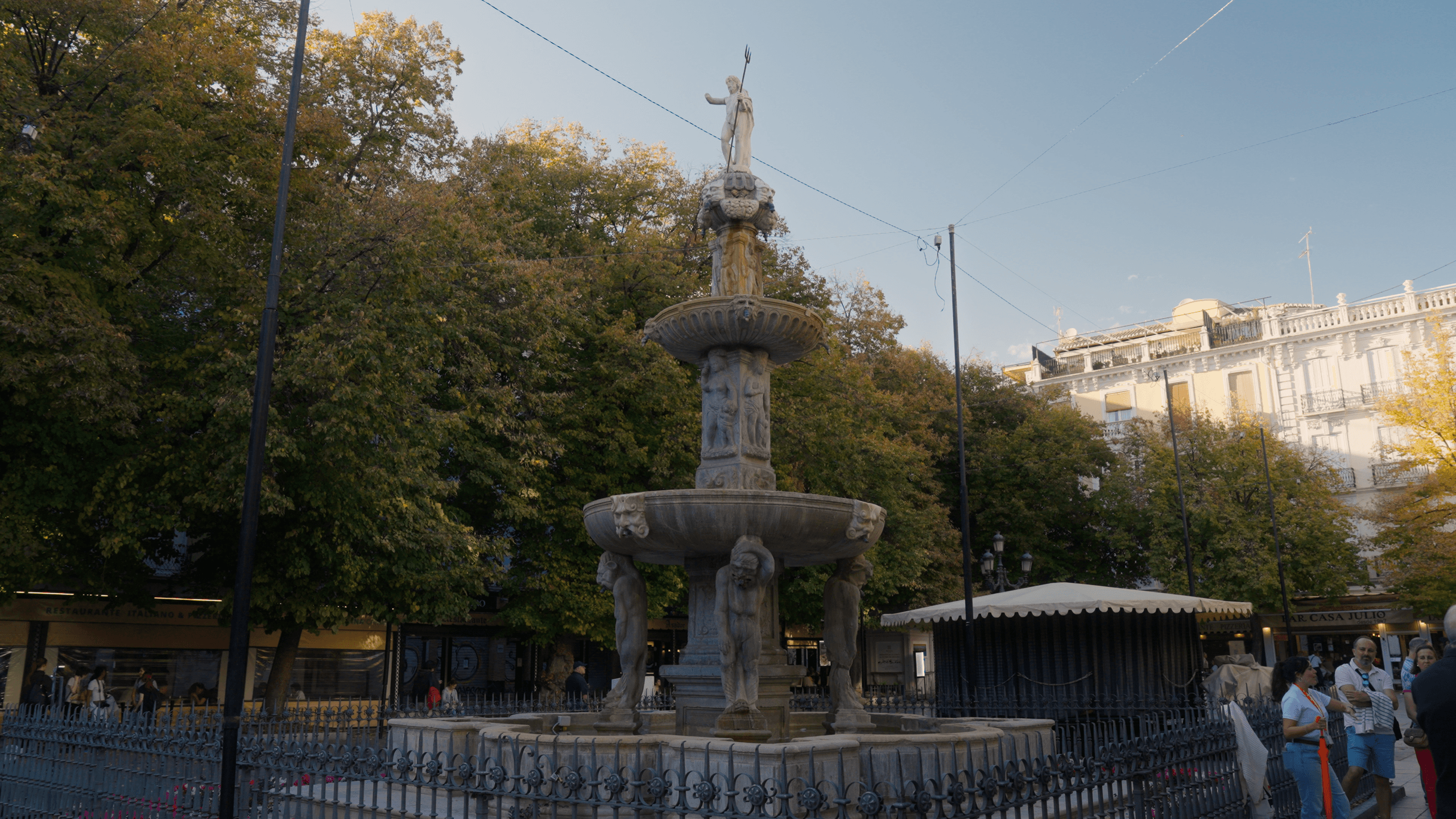
Granada dresses itself in silence and quiet reflection when Holy Week arrives. Ever since the Catholic Monarchs conquered the city in 1492, this celebration has grown into one of the most solemn and moving religious events in Andalusia. With 32 brotherhoods and a designation as a Festival of International Tourist Interest, Granada's Holy Week offers a one-of-a-kind experience where tradition and art meet on every corner of the Albaicín, the Realejo and the Sacromonte.
What makes Granada's Holy Week unique
Granada's Holy Week was born with the Christian conquest of 1492. The Catholic Monarchs brought with them the first processional traditions, which expanded through the 16th and 17th centuries and reached their peak during the Baroque period.
Unlike other Andalusian celebrations, Granada's Holy Week is defined by its sobriety, both visual and musical. Here you won't find the bustle and exuberance of Seville, but rather a restrained spirituality that invites quiet reflection. The 32 brotherhoods that exist today keep alive this tradition of silence, which makes every processional float feel like a prayer moving through the streets.
Its designation as a Festival of International Tourist Interest in 2009 officially recognised what locals have known for centuries: our Holy Week is different — more intimate, more personal.
Holy Week Granada 2025 dates: the full calendar
Official dates: 13 to 20 April 2025
Holy Week 2025 runs from 13 to 20 April, beginning with Palm Sunday and closing with Easter Sunday. The dates shift every year, tied to the first full moon after the spring equinox.
Over these eight days, all of Granada gives itself over to its brotherhoods. Daily routines shift, traffic is cut off, and for a while the historic city becomes a unique stage where religious tradition, Baroque art and Nasrid heritage all come together.
Palm Sunday (13 April)
La Borriquilla marks the official start of Holy Week at 4pm, setting out from the parish of San Andrés Apóstol. This procession re-enacts Christ's triumphal entry into Jerusalem, and its passage through the Arco de Elvira is, according to our specialist guides, one of the best spots to watch it.
El Cautivo, from the church of El Sagrario, stands out especially for its return to the church, the moment of greatest emotional interest, when the bearers carry out the traditional "encierro" (the float's return inside) amid muted applause. La Santa Cena, from Santo Domingo in the Realejo, is best watched, as recommended, in the streets of the neighbourhood, where the historic cobblestones create an unmatched backdrop.
Times and key spots for Palm Sunday:
La Borriquilla: 4pm from San Andrés (must-see spot: Arco de Elvira)
El Cautivo: Iglesia del Sagrario (special moment: the return to the church)
La Santa Cena: Santo Domingo, Realejo (recommendation: watch it in the neighbourhood)
Las Maravillas: San Pedro y San Pablo (unique scenery: with the river Darro and the Alhambra)
El Despojado: San Emilio, Fígares (highlight: one of the city's most famous processional bands)
Local tip: the children dressed as Hebrews with palm branches in La Borriquilla create a lovely family scene, perfect for visitors travelling with kids.
Holy Monday (14 April)
Holy Monday is marked by processions that embrace the neighbourhoods with particular fervour. El Huerto, from the Comendadoras de Santiago in the Realejo, comes with a specific recommendation from our guides: "watching it in the neighbourhood is the way to go" if you want to experience genuine processional life through the narrow streets.
El Trabajo, from El Corpus Christi in the Zaidín, is behind one of the longest processions of the whole week. Its crossing of the Roman Bridge produces beautiful images as the procession is reflected in the waters of the Genil, a moment especially prized by photographers and devotees alike.
Procession of Los Dolores
Los Dolores, from San Pedro y San Pablo on the Paseo de los Tristes, offers something truly one of a kind: a dolorosa (sorrowful Virgin) famous for her robes and pink-coloured canopy, who processes alone. If the route along the river is already beautiful in itself, this singular feature makes her one of the most special of them all.
El Rescate, from the church of La Magdalena, nicknamed "the Lord of Granada," features one of the most beautiful floats of our Holy Week. San Agustín, from the convent of Santo Ángel Custodio, favours silence and quiet reflection, accompanying the Cristo de San Agustín, a masterpiece of Spanish Renaissance sculpture.
Holy Tuesday (15 April)
Vía Crucis, from San Juan de los Reyes in the Albaicín, features one of the most characteristic Christ figures of the Granada style. Our guides particularly recommend the departure and the return as the best moments to catch in the Nasrid neighbourhood.
La Esperanza, from San Gil y Santa Ana, draws huge crowds for its departure. The Virgin wears one of the most spectacular mantles of the whole Holy Week and has her own band, the CC y TT Gran Poder band, considered one of the finest in Andalusia for its exceptional musical quality.
La Lanzada, from the parish of Los Dolores in the Zaidín, is a young brotherhood that has grown by leaps and bounds. The specific recommendation is to watch it returning to its neighbourhood, where the most special part of the whole event plays out.
La Cañilla
La Cañilla, from Santo Domingo in the Realejo, is one of the most beloved brotherhoods in the neighbourhood, known also for taking its Virgin out in procession twice during Holy Week: the full Holy Tuesday procession and again on Good Friday at 3pm. It is accompanied by the Dulce Nombre band, another fine musical ensemble that enriches Granada's processional soundscape.
Holy Wednesday (16 April)
Los Gitanos
Holy Wednesday brings out Granada's most famous procession, and its longest. Los Gitanos sets out at 4:45pm from the Sagrado Corazón on Gran Vía de Colón, distinguished by its use of copper as its signature feature.
The high point is watching it return to the Sacromonte, an experience that leaves no one unmoved. Its climb up the Cuesta del Chapiz at around 11pm is accompanied by bonfires all along the Camino del Sacromonte, along with singing, flirtatious shouts and flamenco saetas that don't let up until the float is brought inside the Abadía de los Peregrinos in the small hours.
Los Estudiantes, from the parish of Santos Justo y Pastor right in the university district, features a tuna (traditional student musical troupe) as its distinctive touch, and its most interesting moment is the encierro, a point of special emotion for the university community.
Brotherhoods of the Realejo
El Nazareno, from the Carmelitas Descalzas in the Realejo, has a markedly sober character, with a dolorosa figure clearly in the Granada style. El Rosario, from Santo Domingo, has a large, well-attended procession and a real sense of neighbourhood spirit, with its return to the church widely considered, in the experience of our guides, the best part.
Las Penas, from San Matías in the Realejo, keeps to a particular sobriety, featuring as its titular image Jesús de la Paciencia, a Renaissance work by Pablo de Rojas that stands as an exceptional artistic treasure.
Maundy Thursday (17 April)
Maundy Thursday brings out the most characteristic "neighbourhood" brotherhoods. La Aurora, from the Church of San Miguel Bajo in the Albaicín, is one of the standout processions of Granada's Holy Week. The best way to see it is in its own neighbourhood, where jaleos (shouted cries of encouragement) accompany it at every corner, creating a unique musical experience that fuses devotion with Andalusi heritage.
La Concha, from the monastery of La Concepción in the Albaicín, belongs to a brotherhood with a more innovative approach to its titular images. Its departure is especially beautiful as it makes its way down towards the Paseo de los Tristes, offering one of the most photogenic scenes of the whole Albaicín.
La Estrella, from San Cristóbal in the Albaicín, is another of the "neighbourhood" brotherhoods, also accompanied by a leading musical ensemble that enriches the soundscape of the Nasrid hillside streets.
El Silencio
At midnight, perhaps the most striking brotherhood of our whole Holy Week takes to the streets: El Silencio, from San Pedro y San Pablo on the Paseo de los Tristes. Its titular image is the masterwork of the artist José de Mora and one of the great Baroque treasures of all Andalusia.
Watching it set out leaves no one unmoved, especially with the Alhambra lit up in the background, creating one of the most striking scenes of the entire Spanish Holy Week. The complete silence that accompanies this night-time procession makes the spiritual experience all the more intense.
Good Friday (18 April)
Good Friday's standout event is the prayer before the Cristo de los Favores in the Campo del Príncipe. This large public gathering takes place at 3pm and marks the death of Jesus, standing as one of the most moving moments of the whole Granada celebration.
Thousands of people gather for this tradition, which connects directly to the history of the Baroque cross built in 1640 and paid for by the residents of the Realejo themselves. Devotion to the Cristo de los Favores grew even stronger after locals came to believe that divine intervention had spared the area from the plague that ravaged Granada.
Standout processions of the Realejo
Los Favores, from San Cecilio in the Realejo, generates one of the processions with the strongest popular fervour. Its departure and return are particularly worth catching, traditionally accompanied by the La Pasión band from Linares, whose participation over many years has drawn great interest for its outstanding musical quality.
Las Chías, from the monastery of San Jerónimo in the Boquerón neighbourhood, belongs to a brotherhood with a clear neighbourhood character, yet a sober one. It is famous for freeing a prisoner every Holy Week and for its distinctive "chías" (heralds) opening the procession, keeping alive medieval traditions found nowhere else in Spain.
Los Ferroviarios, from San Juan de Letrán in the Los Pajaritos neighbourhood, is another important neighbourhood brotherhood, linked to Renfe railway workers. Its distinctive lanterns are its trademark, creating a special glow along its night-time route.
Santo Entierro, from San Gil y Santa Ana, is the official procession, with the typical sober character and accompanied by the municipal band. Its dolorosa is another masterwork by José de Mora, officially closing Granada's Passion with an image of extraordinary Baroque expressiveness.
Holy Saturday (19 April)
La Alhambra
Holy Saturday is reserved for La Alhambra, setting out from Santa María de la Alhambra within the Nasrid complex. It has one of the most beautiful routes of the whole week, particularly the departure and the descent through the Alhambra's woods. Its float carries references to the Court of the Lions, masterfully fusing Christian tradition with Andalusi heritage.
Easter Sunday (20 April)
Los Facundillos
La Resurrección, from the parish of San Miguel in the Zaidín, is notable because the Virgin's float is decorated with fruit. Its return and its crossing of the Roman Bridge are the most striking moments of this Easter celebration.
Los Facundillos, from Santo Domingo in the Realejo, belongs to a brotherhood with a thoroughly children's character. It is famous for its use of terracotta bells that announce the Resurrection, keeping alive a centuries-old craft tradition. This brotherhood hands out little bells to anyone keen to join in, making it ideal for visiting families.
The musical bands of Granada's Holy Week
Processional music is a particularly defining feature of Granada's Holy Week. El Despojado has one of the city's most famous bands, while La Esperanza has her own, the CC y TT Gran Poder band, considered a benchmark in Andalusia for its exceptional musical quality.
La Cañilla is accompanied by the Dulce Nombre band, another fine ensemble that enriches the processional soundscape. La Estrella is accompanied by a leading musical group that perfectly complements the atmosphere of the Albaicín.
The musical tradition reaches a special high point with the La Pasión band from Linares, which has accompanied Los Favores for many years, drawing great interest for its role in one of the most emotional moments of Granada's Holy Week.
Distinctive features of the Granada sound:
Overall restraint compared with the exuberance found in other regions
Benchmark Andalusian bands (Gran Poder)
Traditional Albaicín-style music (jaleos during La Aurora)
Handcrafted little bells (a Los Facundillos tradition)
Best viewing spots, according to our official guides
Our specialist official guides recommend specific spots based on years of experience. The Arco de Elvira is one of the best areas for photographing and watching La Borriquilla. The Paseo de los Tristes offers unique scenery with the river Darro and the Alhambra, particularly for Las Maravillas and El Silencio.
For Los Gitanos, the recommendation is to watch the return to the Sacromonte, a moment that leaves no one unmoved. The streets of the Realejo let you watch the processions within the neighbourhood, an experience especially recommended for La Santa Cena, El Nazareno and Los Favores.
Locations by type of experience:
Historic centre: the Carrera Oficial (Plaza Nueva, Gran Vía, Cathedral)
Albaicín: Nasrid cobbled streets (jaleos on every corner for La Aurora)
Realejo: authentic neighbourhood atmosphere (the return is the best part)
Sacromonte: a unique experience with bonfires and singing
Specific moments not to miss:
El Cautivo's return to the church (peak emotional interest)
Los Estudiantes' encierro (the most interesting moment)
La Concha's departure, heading down towards the Paseo de los Tristes
Campo del Príncipe at 3pm on Good Friday (a unique tradition)
OUR SPECIALIST TOURS WITH GRANADA TOURS
Granada Tours offers exclusive experiences developed by official guides with deep local knowledge. Our tours combine religious tradition, historical context and access to prime spots that only local experience can provide.
Masterpieces route: José de Mora, Pablo de Rojas and the Granada school
Holy Week in the Albaicín: processions with traditional jaleos
Unique traditions: the Cristo de los Favores and medieval rituals
Specialist night tour: El Silencio in an unmatched setting
Benefits of booking with Granada Tours:
Access to the best spots recommended by local guides
Specialist explanations of processional art and history
Small groups, maximum 15 people, for a personalised experience
Insider knowledge of the best moments and locations
During Holy Week, the Alhambra tends to sell out completely. Our guided Alhambra tour provides the perfect historical context for understanding how Christian tradition and Andalusi heritage have coexisted in Granada since 1492.
The Free Tour of Granada sets the history in context from the Catholic Monarchs onward, while the Albaicín and Sacromonte tour takes you through the settings of the most moving processions, especially La Aurora with its traditional jaleos and Los Gitanos on its spectacular return.
You can book any of these tours from our guided tours and free tours in Granada page.
Frequently asked questions about Holy Week in Granada
When exactly is Holy Week 2025 in Granada?
H3: Which procession is really the longest and most spectacular?
Los Gitanos is officially the longest, with its spectacular return to the Sacromonte that leaves no one unmoved. El Silencio stands out for its artistic value as the masterwork of José de Mora.
H3: Where can I see the most moving moment of the whole of Holy Week?
Campo del Príncipe at 3pm on Good Friday, for the prayer before the Cristo de los Favores, a tradition drawing huge crowds that connects with history going back to the 17th century.
H3: Which procession is recommended for families with children?
Los Facundillos on Easter Sunday hands out little bells to children, and La Borriquilla offers the ideal family experience with children dressed as Hebrews.
H3: What are the best viewing spots according to local guides?
Arco de Elvira: one of the best areas for La Borriquilla
Paseo de los Tristes: unique scenery with the river and the Alhambra
Streets of the Realejo: an authentic neighbourhood experience
Hillsides of the Sacromonte: for the unforgettable return of Los Gitanos
Book your guided tour
Want to see it with an official guide telling you in person?