
Visit the Mirador de San Cristóbal, Granada
5 min read
Written by official guides
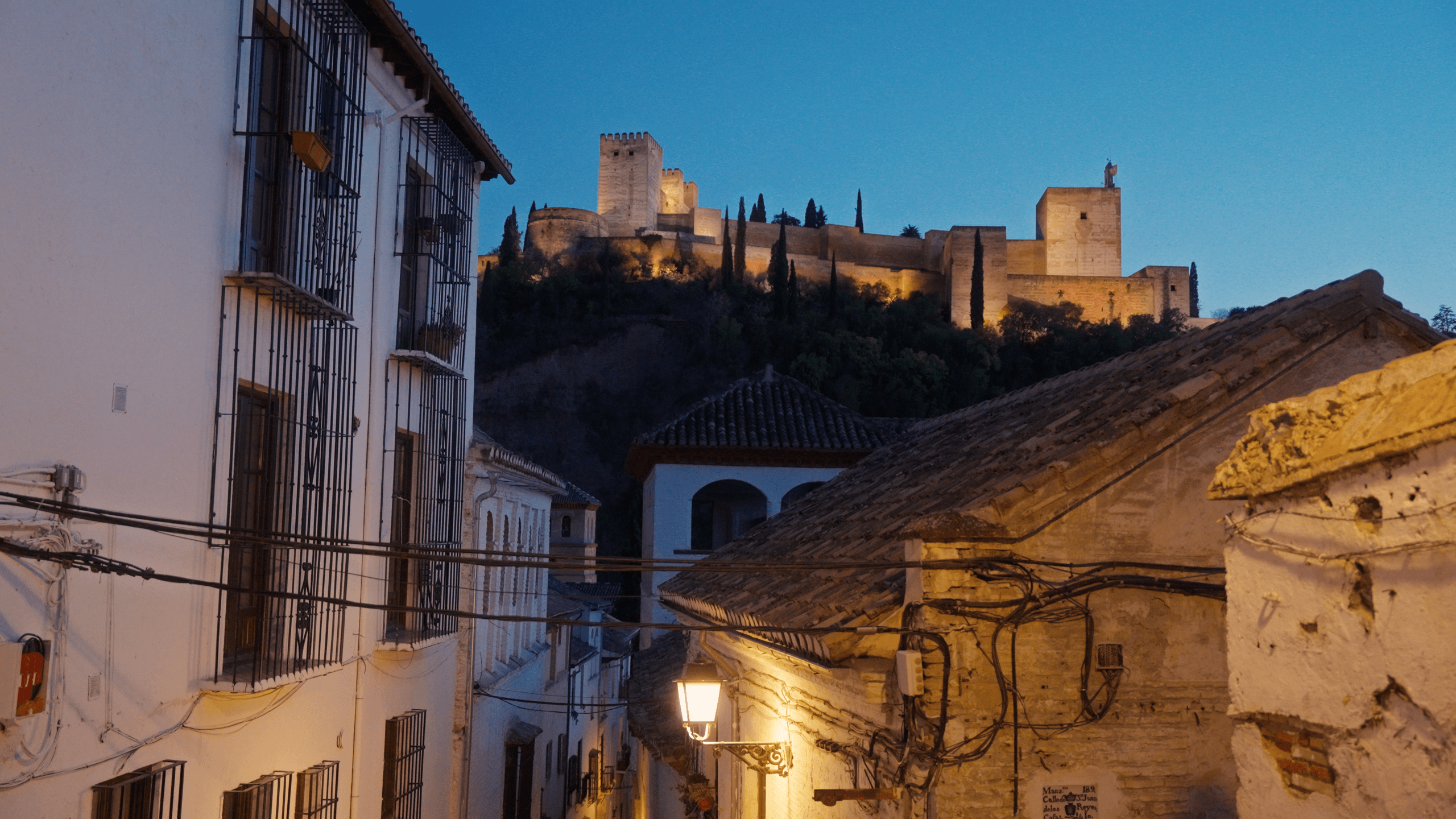
The Mirador de San Cristóbal is one of the smaller viewpoints from which a spectacular view unfolds. What makes this place special is not its size, but its strategic location and rich history going back to the 11th century. Here you get a unique perspective of Granada that few tourists discover, with privileged views of the Dar al-Horra palace and the old Zirid wall.
The area was part of the 11th-century Zirid defensive wall, and its name comes from the Church of San Cristóbal that presides over the spot. This church was built on the remains of one of the mosques in the area, and its minaret tower was adapted as a bell tower, a perfect example of how cultures have been layered on top of each other in Granada.
History of the Mirador de San Cristóbal, Granada
This place has a fascinating history that takes you straight back to medieval Granada. In the 11th century, this area was a key part of the Zirid defensive wall that protected the city. The Zirids were a Berber dynasty that ruled Granada before the Nasrids, and this wall was their main line of defence against enemy attacks.
The transformation came with the Christian conquest in 1492. The new settlers built the Church of San Cristóbal directly on the remains of one of the neighbourhood's mosques. The most interesting thing is that they kept the original minaret tower, simply adapting it as a Christian bell tower. This reuse of Islamic structures can be seen all over Granada, but here it is especially evident.
Today, walking through this area is like travelling back in time. You can see remains of the old Zirid wall while enjoying views that have looked out over centuries of Granada's history.
What to see from the Mirador de San Cristóbal
From here you get a very good view of the famous Dar al-Horra palace, and this is probably the best perspective you can have of this historic building. Dar al-Horra means "House of the Honest Woman" in Arabic, and it was the residence of Aixa, the first wife of Sultan Muley Hassan and mother of the last Nasrid king, Boabdil. Aixa's story is fascinating: she was a powerful woman who played a key role in the politics of the Nasrid kingdom. From this viewpoint you can see where one of the most influential women of Muslim Granada lived, something few visitors know.
Of course, you also have spectacular views of the Alhambra, but from a different angle from the one offered by other, more famous viewpoints. This side-on perspective lets you appreciate the monumental scale of the Nasrid complex from a distance that reveals all its architectural grandeur. It is a view many photographers look for because it offers a unique composition where you can capture both the Alhambra and the Dar al-Horra palace in the same shot.
You can also make out the city centre, with the cathedral as the star. It is a panoramic view that spans from Islamic Granada to Christian Granada, showing perfectly how the city has evolved over the centuries. This perspective lets you understand Granada's urban geography in a way other viewpoints do not: you can see how the different historic neighbourhoods are laid out and how they connect with each other.
And of course, you can see remains of the Zirid wall snaking across the hill. It is a unique testimony to 11th-century fortifications that few tourists can identify but which are fascinating once you know their history. These remains are among the oldest elements you can see from any viewpoint in Granada, and from San Cristóbal you have a privileged view of how these medieval defences were integrated into the natural landscape of Granada's hills.
Why choose the Mirador de San Cristóbal
Unlike more famous and crowded viewpoints, San Cristóbal offers a more intimate and authentic experience. Here you can take your time to contemplate the views without the crowds of other tourist spots. It is the perfect place for photographers looking for unique perspectives of Granada.
The small size of the viewpoint creates a more secluded atmosphere that lets you connect better with the history of the place. It is easy to imagine the Zirid guards keeping watch from these walls or Aixa gazing at the city from her palace.
How to get to the Mirador de San Cristóbal
Access is relatively easy compared with other viewpoints in the Albaicín. You can walk from Plaza Nueva in about 15–20 minutes, climbing the Cuesta del Chapiz or Calle Elvira.
By public transport, lines C31 and C32 drop you nearby, and from the stop it is only a 5-minute walk. It is a comfortable option if you want to save energy to spend longer at the viewpoint.
By car you can park nearby, although the streets of the Albaicín are narrow and parking can be difficult in high season.
Practical information for visiting San Cristóbal
Free access 24 hours a day, although a daytime visit is recommended to better appreciate the architectural details of the Dar al-Horra palace and the remains of the Zirid wall. Sunset is also spectacular, with fewer people than at better-known viewpoints.
Recommended time: 30–45 minutes to enjoy the views and learn the history of the place. It is perfect to combine with a walk through the Albaicín or a visit to the Sacromonte. The spot is accessible for people with reduced mobility, as it does not require long walks or steep steps.
Discover the secret viewpoint of the Albaicín, where Zirid history meets panoramic views, where you can gaze at the palace of a Nasrid queen and where every stone tells of centuries of coexistence between cultures. A small but unforgettable treasure that is part of the authentic soul of Granada.
Book your guided tour
Want to see it with an official guide telling you in person?