
Visit the Paseo de los Tristes in Granada
5 min read
Written by official guides
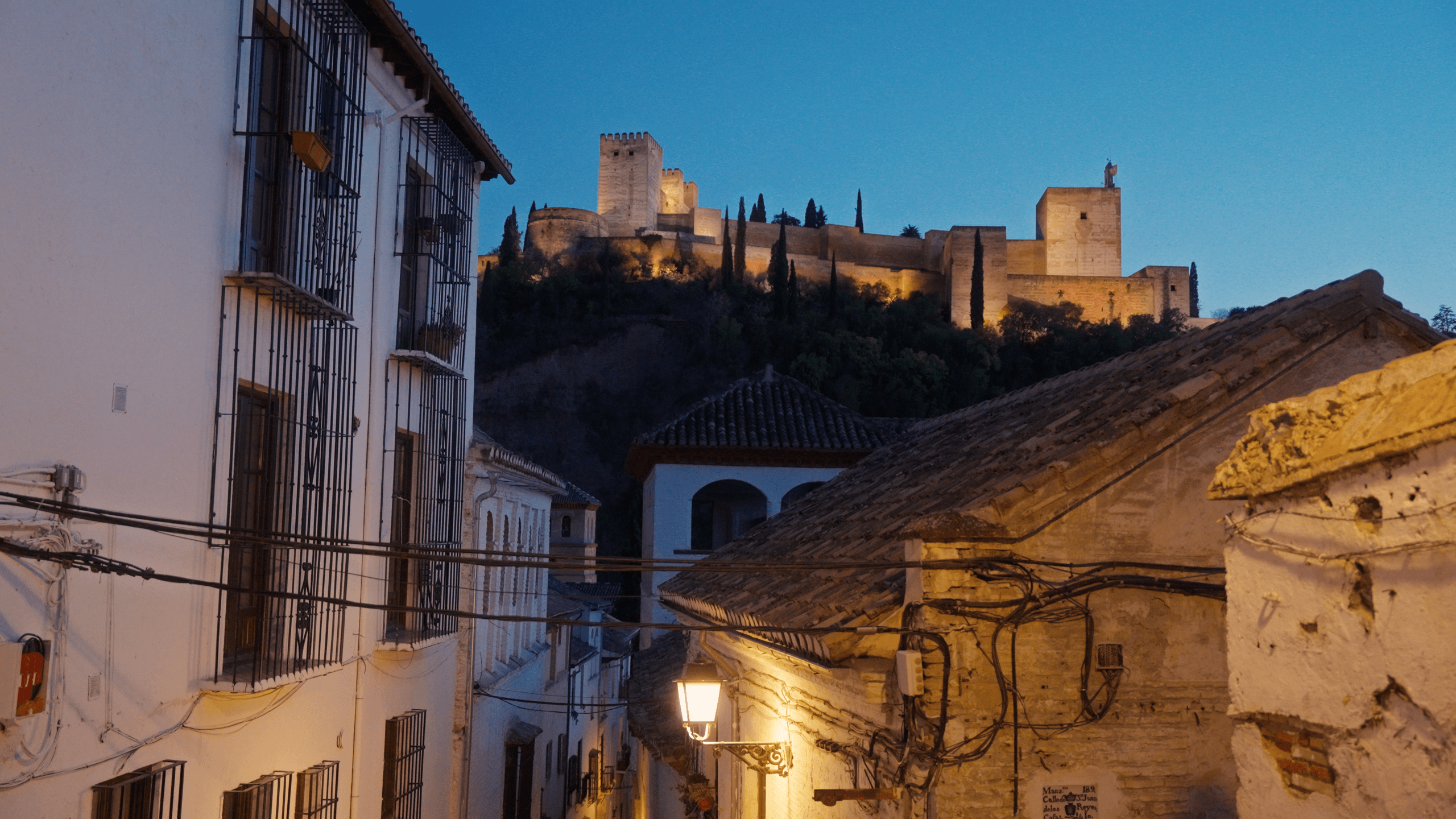
The Paseo de los Tristes is the street that connects the Plaza Nueva area with the Sacromonte neighbourhood. A long, picturesque street, considered one of the most beautiful in Spain. Its original name is Carrera del Darro, since it runs parallel to the course of the river Darro.
What makes this place unique is not only its spectacular views of the Alhambra, but a fascinating and somewhat macabre history that explains why it is called "of the Sad". It is a walk that combines beauty, history and a privileged perspective of the Nasrid monument that few places in Granada can offer.
History of the Paseo de los Tristes
This area has several churches, and by the 19th century it was still common to be buried in parish and church graveyards. The poorest people were buried without a coffin. When the river rose, it often swept away the graveyard walls and, with them, several burials. To avoid the continual river of corpses, it was decided to vault over the river and adopt the new style of cemetery that was gaining ground across Europe. That is how the San José cemetery was born.
For burials, families used to take the funeral procession up the Cuesta de Gomérez. However, the tourists and visitors already coming to the Alhambra complained about the disturbance this caused. The city council required all funeral processions to go up the Cuesta de los Chinos instead, which made the route much longer, since the whole Carrera del Darro had to be crossed to the end.
The Carrera del Darro began to be known as "the road of the dead". Over time, the more poetic visitors began to call it the "Paseo de los Tristes" (Walk of the Sad), and the name has stuck to this day. A name that evokes melancholy but has become a byword for beauty and romance.
What to see on the Paseo de los Tristes in Granada
Privileged views of the Alhambra
It is considered a beautiful viewpoint of the Alhambra in its own right. From here you have a head-on view of the Nasrid monument that lets you appreciate the Comares Tower, the Nasrid Palaces and the Generalife in all their splendour. It is especially spectacular at sunset, when the golden light bathes the walls.
Casa de las Chirimías: a 17th-century gem
Until the 19th century this esplanade was the scene of great celebrations and festivities, with bullfights and cane games. Sometimes the river Darro was covered with scaffolding to make more room. To liven up these festivities, the Casa de las Chirimías was built in 1609, on land donated by the lords of Castril. From the small balcony of this little building, musicians enlivened the festivities with their shawms and trumpets.
Historic bridges over the river Darro
On the Paseo de los Tristes two bridges cross the river Darro. The Puente de las Chirimías, next to the house of the same name, dates from 1882, as the original medieval bridge has disappeared. The Puente del Aljibillo dates from the Zirid period, probably built around the 11th century, although few original elements remain.
Hotel Reuma: a ghost from the past
If you cross the bridge you will find yourself in front of an abandoned building that stands out for its ghostly appearance. It is the so-called Hotel Reuma, although it was actually called the Hotel Bosques de la Alhambra. This hotel opened in 1910 and did not stay open long, since its wooden structure was apparently not well suited to the damp of this part of the river.
Illustrious figures
It also brings to light important figures from the area, such as the dancer Mario Maya and Father Manjón. Opposite the Casa de las Chirimías stands the monument to the dancer Mario Maya, who grew up dancing in the caves of the Sacromonte and triumphed around the world with his flamenco.
The Paseo de los Tristes is a lovely area to visit, full of points of interest. It has the churches of Santa Ana and San Pedro y San Pablo (both 16th century). It has the Archaeological Museum in a beautiful 16th-century mansion and also the Bañuelo, an 11th-century hammam.
It is full of little shops and terraces where you can have a drink, and it preserves ancient remains such as the 11th-century Puente de los Tableros. In the area you can also find some remains of Arab houses and several Morisco houses built shortly after the conquest.
The Casa Horno de Oro, at number 14 of the street of the same name, is a house of Nasrid origin whose entry is included in the Dobla de Oro ticket: a visit few tourists know about but which is fascinating.
How to get to the Paseo de los Tristes
You can get to the Paseo de los Tristes on minibus C31, C32 or C34. You can also get off at the Catedral de Granada stop (Gran Vía 1) on buses 4, 8, 11, 21 and 33 and walk about 5 minutes.
You cannot reach the Paseo de los Tristes in your own vehicle. This area is only open to residents, buses and taxis, a measure to preserve the pedestrian character and peace of this historic area.
On foot from Plaza Nueva it is about 10 minutes' walk along the Carrera del Darro, a very pleasant stroll that lets you discover the most beautiful corners of the old town.
Practical information for your visit to the Paseo de los Tristes
Free access 24 hours a day to stroll and enjoy the views. Bars and restaurants have their own hours, but most open from mid-morning until late.
The best time to visit is sunset, when the light creates a magical atmosphere and the terraces fill with life. However, any time of day offers spectacular views of the Alhambra.
Recommended time: 1–2 hours to stroll at a relaxed pace, visit some monuments and have a drink on the terraces. It is perfect to combine with a visit to the Albaicín or the Sacromonte.
Discover the most beautiful street in Spain, where macabre history turns into poetic beauty, where every stone tells centuries of Granada tradition and where the best views of the Alhambra await you on every terrace. A place where past and present live together in perfect harmony.
Book your guided tour
Want to see it with an official guide telling you in person?